Makena Huey | Ventura County Star
A law Gina and Steve Meyer believe could have saved their daughter’s life may reach beyond the state to the federal level.
U.S. Rep. Julia Brownley, D-Westlake Village, announced Sept. 23 that she introduced Katie Meyer’s Law, a bill that would give college students across the United States the right to have an adviser help them navigate disciplinary proceedings.
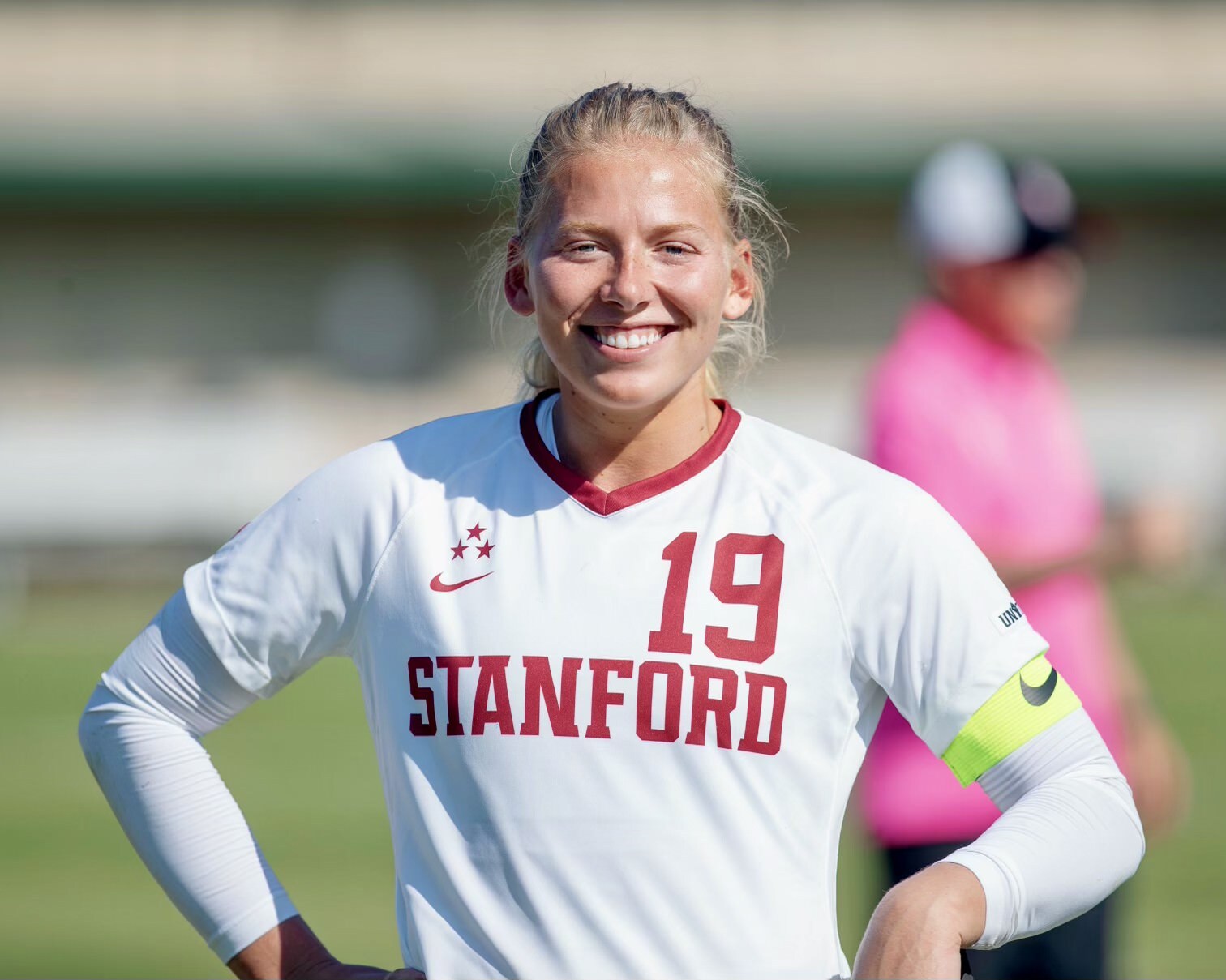
Katie Meyer, a Newbury Park native and standout Stanford Univeristy goalkeeper, died by suicide March 1, 2022, after receiving threats of disciplinary action just four months before her graduation.
“We absolutely know that she would not want this to happen to another student on campus,” Gina Meyer said. “So if they can have that extra support and guidance and not feel alone or intimidated or scared going through the process, then it means everything for it to go federal.”
The night before her death, Katie Meyer received an email from university officials informing her that her degree could be withheld and that she could be expelled. The notice came after three months of near silence from Stanford administration regarding an August 2021 incident in which she allegedly spilled coffee on a football player accused of sexually assaulting her soccer teammate.
The email, which her parents were not aware of until after her death, caused her to experience an acute crisis stress reaction and without any support from the university, she took her own life at just 22 years old.
“Her smile, her laugh, her wit, her sense of humor, her everything—you just miss everything,” Gina Meyer said. “It still feels really raw. Even 3 ½ years later, it still feels like it was yesterday.”
“Grief, it seems, is our love for her not being able to go directly to her physically on this plane, and that may be what’s motivating us to do the legislative work,” Steve Meyer said. “It’s an expression of our love for her.”Within just days of their daughter’s death, Gina and Steve Meyer decided they would do everything in their means to ensure students have a trusted, informed adult during disciplinary proceedings so they aren’t left to ruminate without support.
While creating Katie’s Save, a nonprofit designed to promote mental health and prevent suicide among college students, the couple made strides on the legislative side.
Because of their dedication, Assemblymember Jacqui Irwin, D-Thousand Oaks, authored California Assembly Bill 1575, The bill passed out of the Legislature and to Gov. Gavin Newsom who signed it into law Sept. 28, 2024.
The law requires public institutions of higher education in California to allow students facing alleged academic or athletic code of conduct violations to choose their own adviser to advocate for them at disciplinary hearings and other aspects of the process.
The adviser must be trained on the institution’s adjudication procedures and has the authority to receive biweekly updates on the process from administrators and participate in proceedings.
The state law went into effect at the start of the current academic year, just in time for their daughter Sienna to start her freshman year at UCLA. The parents said they hope she is never in a situation where she needs the law, but they find comfort in knowing it is available to them if they do.
Though the Meyers had been meeting with representatives in an effort to make the legislation more widespread one state at a time, they told Brownley about their goal for a federal bill. That was about a year and a half ago, and when they recently learned she was introducing her own legislation, they were ecstatic.
“It is for sure bittersweet and perhaps healing as well,” Steve Meyer said of the lobbying process. “When tragedy strikes to this magnitude, if we can find a way to turn that heartbreak and pain into a purpose greater than ourselves, that’s a noble aim and that’s what we’re trying to do.”
The federal version of California’s Katie Meyer’s Law seeks to instate nearly identical protections but on a national scale.
The primary difference is that the federal bill would also apply to private schools, including Stanford, said Alessandra de la Fuente, a communications manager for Brownley.
It would also require colleges and universities that receive federal funding to include suicides in their annual security reports.
De la Fuente said there is no timeline for action on the bill at this time.
“College should be a place where students can learn, grow, and prepare for their futures, not a place where they are left to navigate intimidating and high-stakes disciplinary processes alone,” Brownley wrote in a Sept. 23 news release. “We owe it to Katie, her family and countless other young people to make sure no student feels alone in their greatest moments of need.”
Gina and Steve Meyer said they have realized that at college campuses, students are too often presumed guilty until proved innocent rather than the other way around. A federal Katie Meyer’s Law would provide much-needed due process and balance the power between students and academic corporations, they said.
After receiving countless messages from students and families across the county that have expressed a desire for increased advocacy and transparency, the parents said they are grateful for Brownley’s assistance.
“I believe that the law is a reflection of the life that she lived,” Steve Meyer said. “It’s inclusive, it’s protective, it’s loving and it’s for everybody.”
This story was originally published by the Ventura County Star on October 3, 2025.
Issues: 119th Congress