Linda F. Hersey | Stars and Stripes
WASHINGTON — The Department of Veterans Affairs unveiled a massive plan Thursday for expanding its community care network with the purchase of $1 trillion in private health services over the next decade.
At a contentious hearing of the House Committee on Veterans’ Affairs, the VA’s chief financial officer detailed a proposal for restructuring community health care as a nationwide network of providers — including doctors, dentists and pharmacists — managed by third-party administrators.
National and regional health plans would be able to compete to offer their services.
The community care program enables veterans to access private care from non-VA medical providers at the department’s expense, the VA said.
“I want to make sure that this money goes where it needs to go — to improve veterans health care nationwide,” said Rep. Mike Bost, R-Ill., the committee chairman, at the start of a hearing to examine the plan.
The VA issued a request for proposals in December to fund multiple contracts for services from private health plans and providers, valued at $1 trillion over 10 years.
Bost described the request for proposals, due March 15, as one of the largest contract solicitations in the nation.
VA’s purchasing model will define how the agency organizes, operates and grows care provided by the private sector, he said.
“This hearing is only the start of congressional oversight. The VA must get this right,” Bost said. “Veterans are enrolled in VA care at unprecedented rates. Community care is the only way to keep up.”
But Rep. Mark Takano, of California, the top Democrat on the committee, warned that VA is accelerating a shift away from the public health sector to private care, run by large corporations.
He predicted the move will result in out-of-control growth — “a cost explosion.”
“This mirrors the trend in other federal health care programs where taxpayer dollars are paid to private corporations to administer these previously trusted public health programs,” said Rachel Madley, executive director of the Center for Health Democracy.
Takano accused VA leadership of rushing the process for soliciting bids without giving prior notice to Congress.
Richard F. Topping, the VA’s chief financial officer, testified that the demand for non-VA medical services has continued to rise each year, since the 2018 passage of the MISSION Act, which opened up veterans access to private-sector care.
More than 40% of veterans received at least some of their care from private doctors in fiscal 2025, he said.
Topping said VA’s new contract terms with private-sector health plans and providers will ensure the department maintains control over quality and delivery.
In 2018, VA signed contracts with health plans to serve as third-party administrators and manage VA’s community care program. But many of those contracts are now set to expire.
New contracts will continue veterans access to non-VA care while expanding the number of providers, Topping said.
VA will have the ability to issue several “competitive task orders” and adjust requirements, Topping said.
To become a registered provider with the VA, clinicians must undergo a credentialing process and submit extensive information documenting licenses and professional experience.
“This program ensures that veterans are not simply referred to any available provider, but to those demonstrating strong outcomes and safe, high-quality care,” Topping said. “By allowing for multiple contractors to compete for multiple rounds of varied task orders, [VA] will ensure continuous competition over the performance period of the contract.”
Health plans and providers that do not meet VA requirements will be “off ramped” and replaced, Topping said.
“This is a revolutionary idea, if done properly. It will give VA unprecedented flexibility to leverage competition for the benefit of veterans,” Bost said.
But Rep. Delia Ramirez, D-Ill., said she is concerned that the VA is barreling toward privatization with a lucrative spending plan that will enrich heath care corporations.
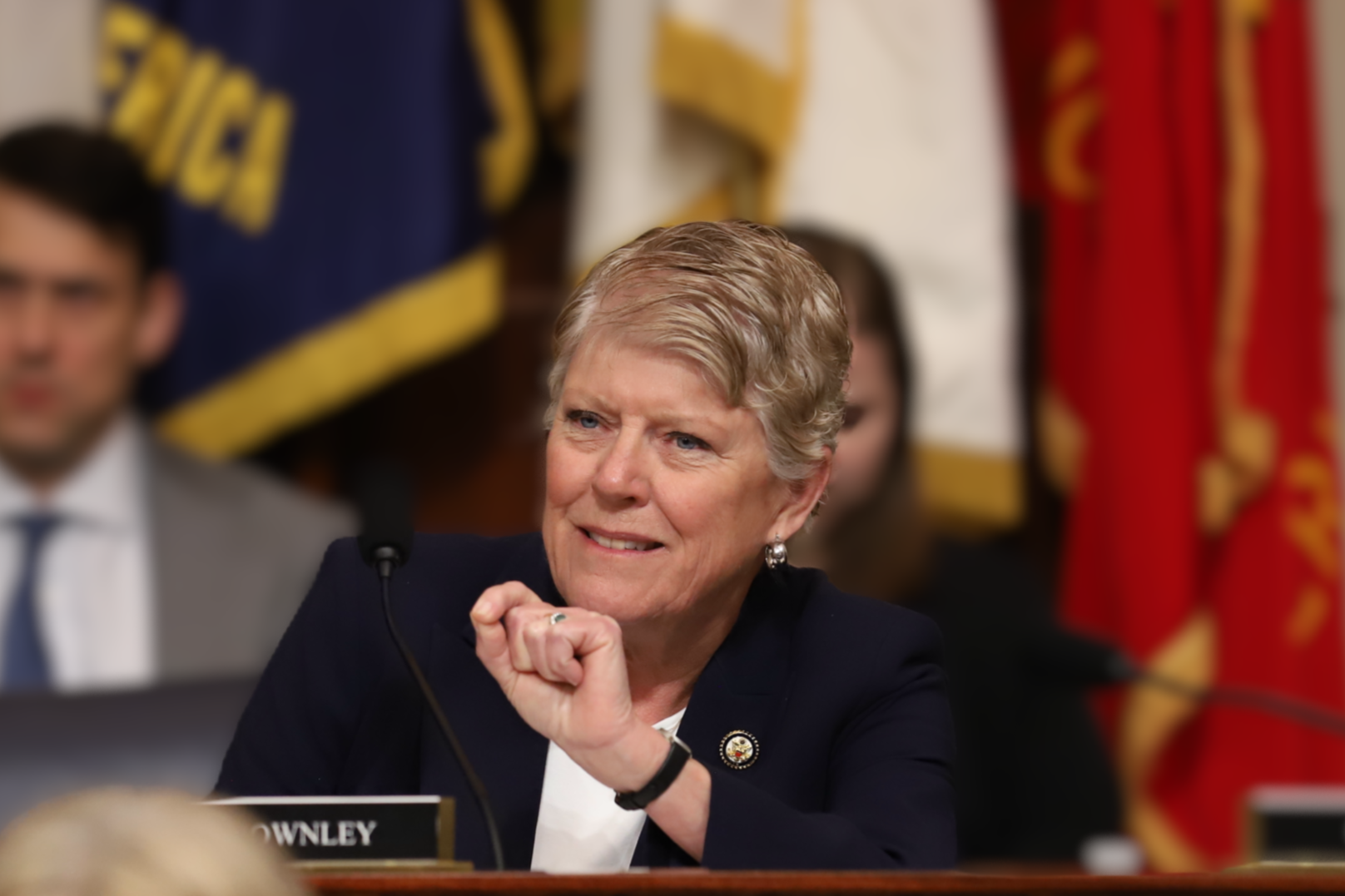
Rep. Julia Brownley, D-Calif., said that the VA is becoming a payer, rather than a provider, of health services.
“VA is not shutting down facilities, but it does not require important oversight for veterans to receive care in the community,” Brownley said. “It seems competition is the oversight piece in the contract.”
Community care is just one tool to serve veterans, Topping said.
At the same time, the VA plans to spend $2 trillion in direct care at its hospitals and clinics over the same period, he said.
But Madley, of the Center for Health Democracy, warned that the private sector will prioritize profits.
“The rapidly spreading pattern of outsourcing federal health programs to private companies comes with the promise of better care and lower costs. However, in reality it results in higher costs, worse care, and taxpayer-funded profits for corporations,” Madley said.
Concerned Veterans for America, whose founding in 2011 was backed by conservative billionaires Charles and David Koch, offered an opposing view.
John Vick, the executive director, said veterans will have more choices for health services that are close to home.
Vick, a Marine Corps and Navy veteran, said it personally frustrated him that he was unable to receive coverage to see the same private doctors in his community as family members.
“Veterans should have the choice of seeking care either at a VA facility or a community care provider depending on which best meets their needs,” Vick said. “We advocate for choice and accountability.”
This story was originally published by Stars and Stripes on January 22, 2026.
Issues: 119th Congress, Healthcare, Veterans' Affairs