Grant Phillips | Ojai Valley News
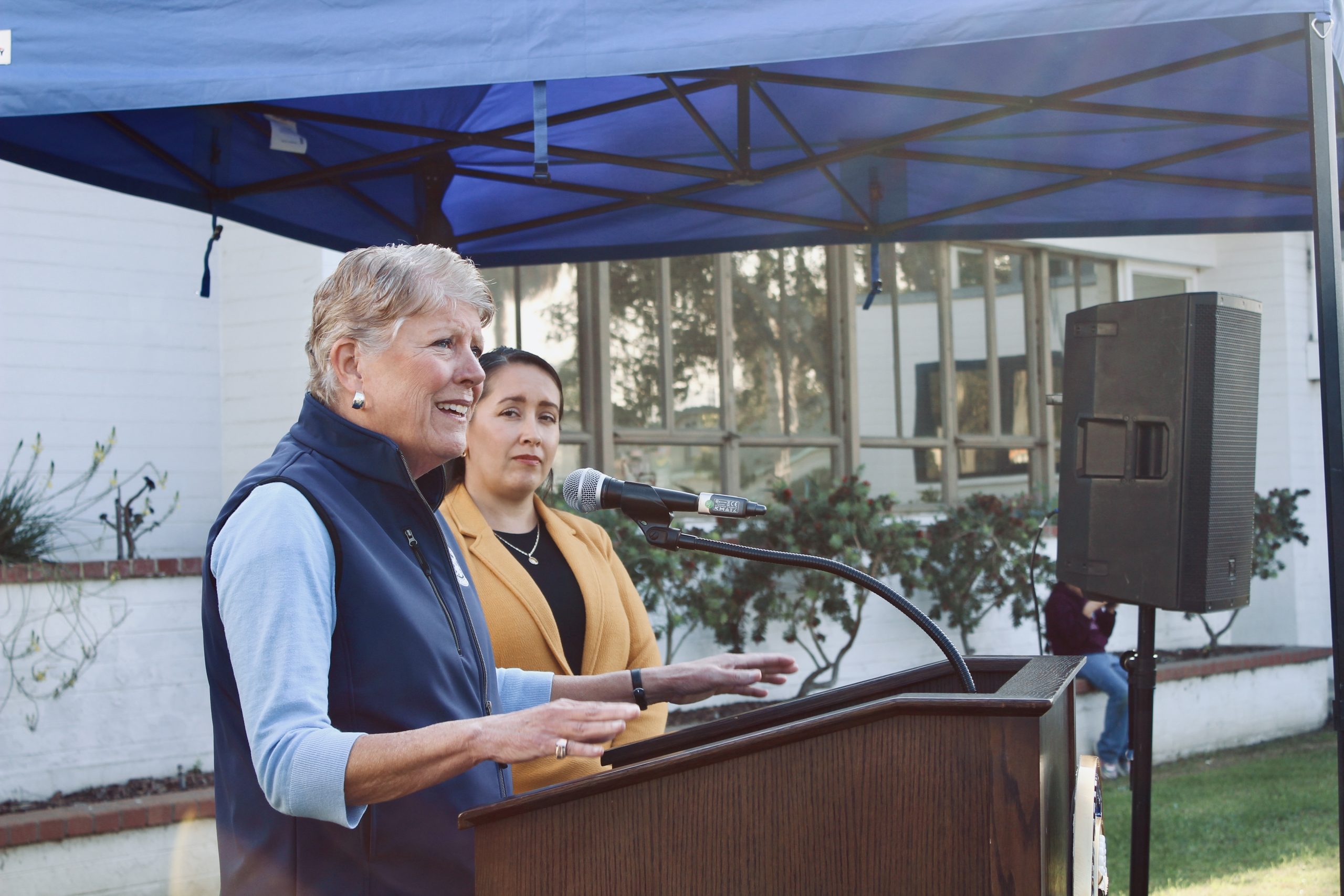
Congresswoman Julia Brownley, who represents sections of Ventura County, addressed the impacts the federal government shutdown is having on local residents during a press conference held Nov. 3 at Santa Paula City Hall.
The current 6-week government shutdown is now the longest shutdown in U.S. history, passing the shutdown that occurred during President Trump’s first term.
Brownley’s shutdown concerns centered around the halt of Supplemental Nutrition Assistance Program (SNAP) benefits and ongoing health care coverage.
Also speaking at the conference were Santa Paula Mayor Pedro Chavez and Ventura County Supervisor Vianey Lopez.
“At first glance, this shutdown may appear to be a distant issue, happening in newspaper headlines or 3,000 miles away, but it is not,” Lopez said. “It is happening here, it is impacting our Ventura County families.”
Why the shutdown
The government shutdown resulted from a budget standoff between Republicans and Democrats in Congress, who were unable to agree on a funding bill after a previous federal budget expired Oct. 1. An approved funding bill is required for the government to operate and pay its bills.
The disagreement centers around Democrats wanting an extension of tax credits set to expire that make health insurance cheaper for millions of Americans. Democrats also aim to reverse Medicaid cuts, which provides health care coverage for elderly, disabled and low-income residents.
Now, ending the shutdown requires the Democrats and Republicans in the Senate to find a compromise that Trump will sign, called a “continuing resolution,” which will temporarily reopen the government, until a funding bill is worked out.
The 14th vote on a “continuing resolution” failed on Nov. 4, which would have reopened the government through Nov. 21.
The resolution needed 60 votes to pass, and did not receive enough support, with a majority of Democrats voting against the resolution.
“Democrats in the House of Representatives didn’t vote for that, because Republicans refuse to negotiate or even work with us to come up with some kind of solution,” Brownley said.
In addition to the various U.S. government services being suspended, along with 1.4 million federal employees on unpaid leave, full SNAP food benefits for local families have been paused.
“77,000 residents, including 28,000 children [in Ventura County], depend on Calfresh, our state’s version of SNAP, to meet their most basic nutritional needs,” Brownley said. “This was a deliberate choice, a weaponization, if you will, of hunger to score political points.”
SNAP benefits and food security
While SNAP benefits are paused, Trump announced that a court ruling stated the U.S. Agriculture Department will pay money out of its contingency fee toward families who need the benefits.
“It costs $9 billion dollars a month for the SNAP program,” Brownley said. “What’s in the contingency is roughly five-and-a-half billion dollars.”
The Agriculture Department will calculate who will receive sections of this smaller chunk of funding.
“The president has the ability, and the Secretary of the Agricultural Department has the ability, to transfer funds to bring that five-and-a-half billion to 9 billion dollars for November, to have the full payment and full service for November,” Brownley said. “But they have chosen not to.”
If the shutdown continues into December, it is uncertain whether any funding will remain.
“When we get to December, if the government’s not reopened, there will be no money for the food stamp program,” Brownley said. “This program has never ceased during any shutdown in American history.”
Brownley added that within Trump’s Big Beautiful Bill, there is a $200 billion cut to SNAP benefits, which will take place in 2026.
“When that happens, that’s going to have huge impacts on food security around our country,” Brownley said.
Community members and organizations have stepped up to provide food for those not receiving their benefits.
“Thank God for Food Share and the community operations that happen here in Ventura County,” Brownley said, adding that she planned to help distribute food in Santa Paula after the press conference. “Given these SNAP cuts, without organizations like Food Share, literally, people here in the county would not eat.”
More options for Ojai and Ventura residents can be found at: https://www.ojaivalleynews.com/news/health/ojai-valley-residents-organize-to-help-hungry-neighbors/article_140d8395-463f-44f6-8bca-901d174c5fa2.html
Health care concerns
Brownley also addressed the health care concerns that center around the shutdown.
“Health care premiums are set to double for 22 million Americans, and another 15 million will lose their medicaid coverage altogether,” Brownley said of the changes in the Big Beautiful Bill. “Health care is a human right, it’s not a privilege.”
While Democrats have demanded the health care subsidies be extended as part of any funding deal they sign, Republicans say they’ll only negotiate on the issue once the government is funded, leaving both at a standstill.
While some tax credits will remain, the level of support will decrease for most enrollees.
Anyone earning more than around $63,000 per year for a single person won’t be eligible for the remaining tax credits.
“I have private conversations with some of my Republican colleagues who don’t want this shutdown to be happening in the first place,” Brownley said. “They have said to me we should reinstate the tax credits that happened under Obama so people’s health care costs don‘t skyrocket, but yet, they remain silent in terms of speaking out and speaking up for what is right.”
An end in sight?
Brownley said health care coverage and food benefits remain center stage when it comes to ending the shutdown.
“Democrats are just asking at this particular moment in time, please, do not let health care costs skyrocket, please let’s feed the American people who need it, let’s feed our children, make sure our seniors, everyone, has the access they need,” she said.
And while she signaled bipartisan conversations were occurring behind the scenes, she was unsure when the shutdown would end.
“I do not know when this shutdown is going to end,” Brownley said. “I hope it’s soon, all the Republicans have to do is decide to open up the government, and the government will be open.”
At 9 p.m. on Nov. 4, if the shutdown continues, it will be the longest in government history.
This story was originally published by Ojai Valley News on November 4, 2025.
Issues: 119th Congress, Food Insecurity, Healthcare, Local Issues